


Vancouver, BC | Posted: June 26th, 2017
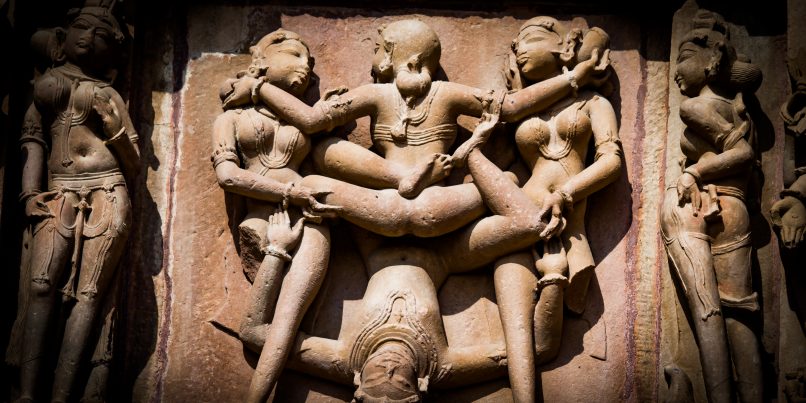
The world over, across many faiths, devotees pray to find love and to bear children. Whether or not the practice comes to fruition can only be told by those who have experienced it. The world is full of beautiful stories, some are mythical, some are passed down through generations, and some are told through various religions and faiths. There is something super romantic about desiring love or children so intensely, and we were dying to find out more. Here are just a few of the world’s fertility temples and temples dedicated to love:
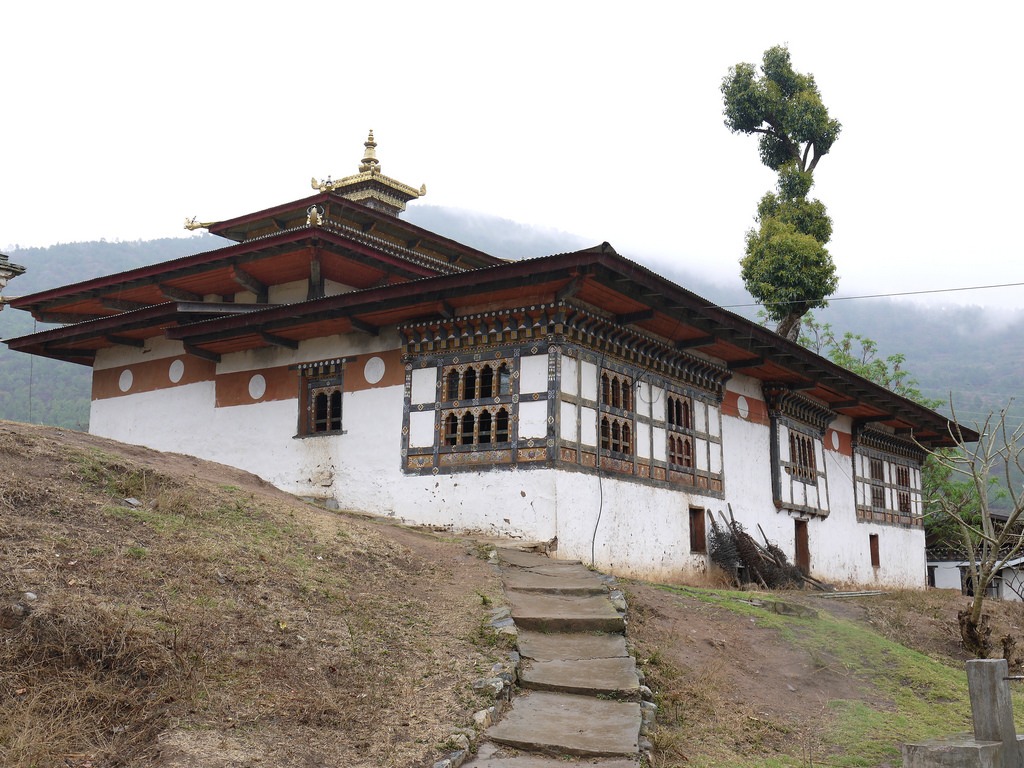
It is said that the Chimi Lhakhang temple is a considered a sacred fertility temple that childless couples visit to pray for children. The temple is dedicated to Lam Drukpa Kuenley (1455-1570), also known as the divine madman, one of the most popular Buddhist Saints from Tibet. It was built by his cousin later in the 15th century to honor Kuenley after he subdued a demoness who took the form of a dog with his ‘flaming thunderbolt of infinite wisdom’.
Visiting this temple may come with some surprises. Women who make the pilgrimage hoping for the blessing of children are traditionally hit on the head with a 10-inch ivory, wood and bone phallus. If you explore the surrounding village of Yowakha, visitors will notice all of the houses’ exterior walls are painted with phallic symbols.
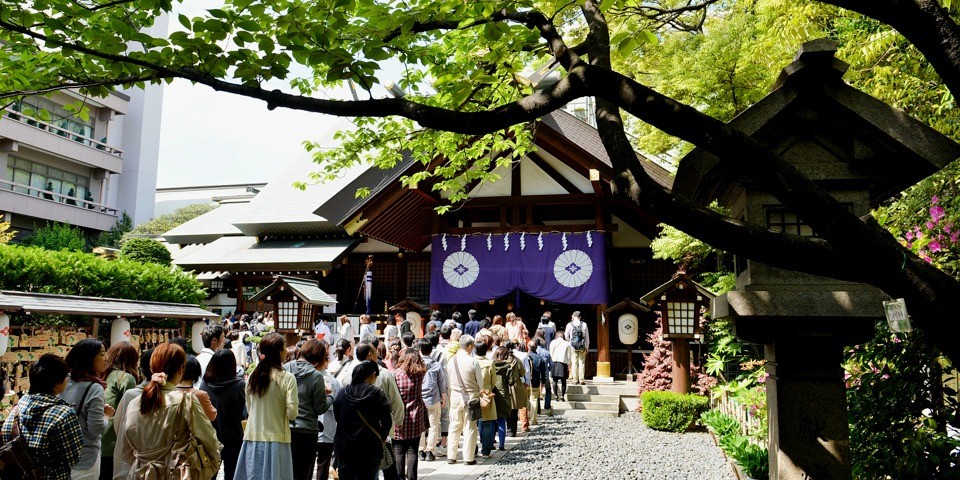
If you’re planning a trip to Japan, you may want to visit this shrine. Daijingu is one of the most popular shrines in Tokyo, and receives a growing number of young people who are praying for blessed marriages. The enshrined deities include:
Amaterasu-Sume-Ohkami, the ancestral deity of the Imperial Family who is enshrined in the Inner Shrine of the Grand Shrine of Ise. Amaterasu-Sume-Ohkami is also the tutelary deity of all Japanese people.
Three deities of creation and growth: Kamimusubi-no-kami, Ameno-Minakanushi-no-kami, and Takamimusubi-no-kami.
The guardian deity of industry, clothing, food, agriculture and housing – Toyouke-no-Ohkami who is enshrined in the Outer Shrine of the Grand Shrine of Ise.
Yamatohime-no-mikoto – the founder of the Inner Shrine of the Grand Shrine of Ise.
Khajuraho Group of Monuments – India
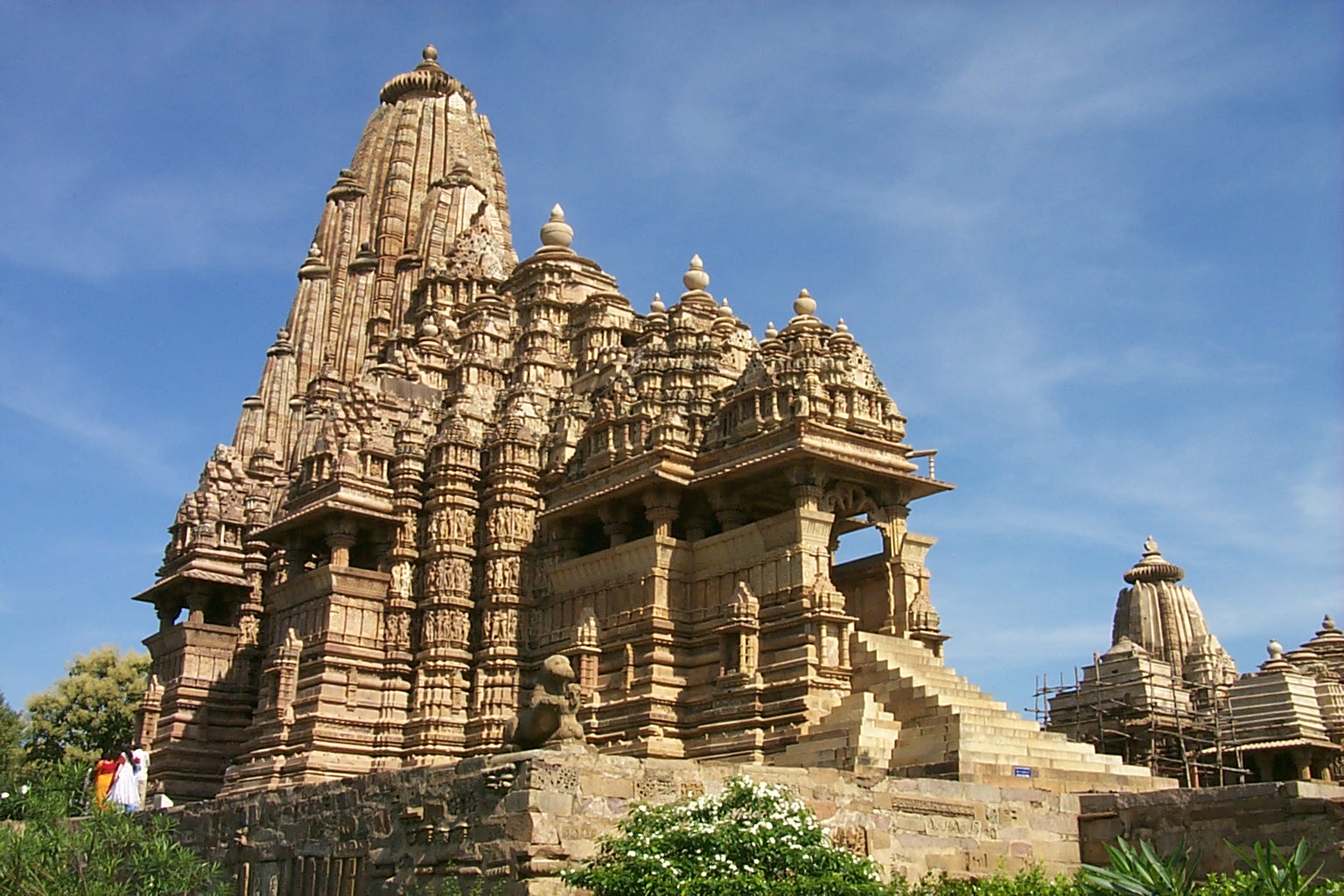
This group of monuments may be one of the more well known because of their erotic sculptures. It’s important to note that the carvings and sculptures are only about 10% of the stunning artwork adorning the temples and viewers really have to look for them. The artworks are fashioned in such a way to display the numerous aspects of human life, not only the tantric.
We could not find any evidence that people use these temples solely to pray for love or fertility, however, there may be certain parts of the group which more clearly reflect love and/or marriage. Either way, devotees visit to offer their prayers and visitors should visit the monuments and take it all in, because each temple has unique beauty and relevance to various parts of our lives.
Pura Candidasa – Bali, Indonesia
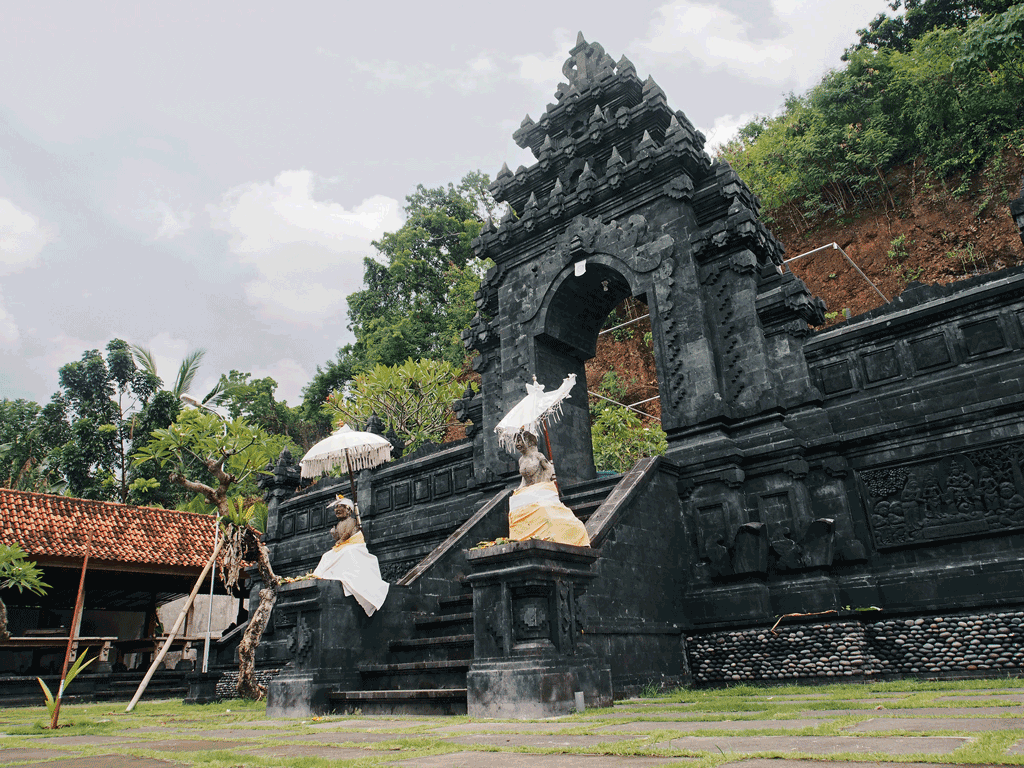
Indonesia is long known as a place to go for rest, relaxation, and self-discovery. It’s also a place that is well known for its temples and rich culture. The temple Pura Candidasa has an interesting story behind it, but it is well known for Balinese Hindus as a place to pray for fertility and rain (not necessarily in that order). Here’s the long story short:
The Balinese Hindu goddess, Hariti, badly wanted children but was infertile. She was madly in love with a very handsome God but failed to bear him an heir. One day, a Balinese couple standing on a hilltop were crying and praying for rain. Hariti heard their cries, but with her divine knowledge, knew they were lacking more than rain. She knew they were also barren. Their despair made her so sad, she began to cry and her tears fell as rain onto the couple.
Suddenly, filled with passion from the magical rain, the couple made love atop the hill. This resulted in a pregnancy and their first child. But, the magic didn’t stop there, Hariti also became fertile from this exchange. Very fertile. She ended up bearing 10 children, and her stud of a husband was very happy. From then on, the hilltop temple is a hotspot for Balinese people to go pray for rain and fertility. It is said, if you make love on the hilltop and it rains on you, you will bear many children. We highly recommend you don’t do that, Balinese laws now prohibit it 🙂
Pura Jayaprana – Bali, Indoniesia
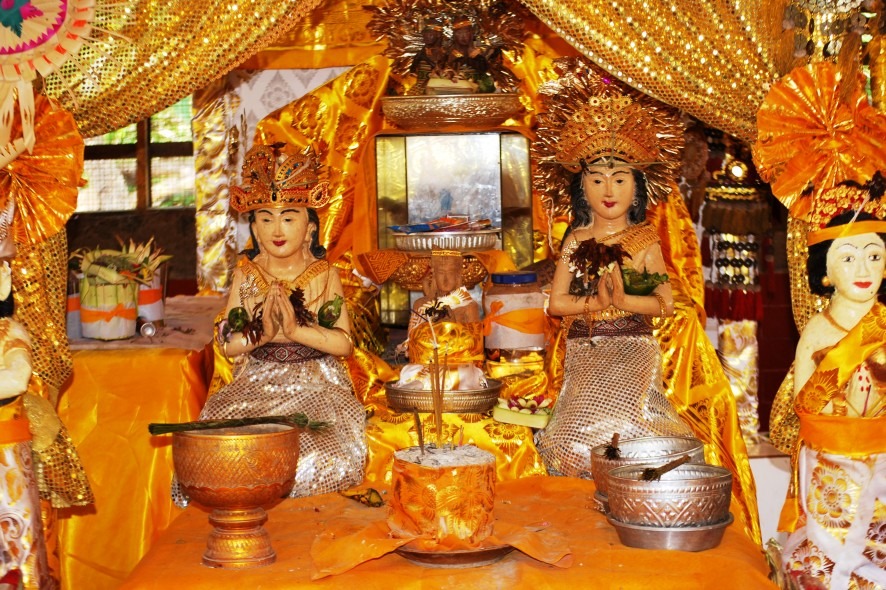
Carrying on with the romantic stories from Indonesia, there is the story of the Pura Jayaprana. While Italy has the story of Romeo and Juliet, Indonesia has the story of Jayaprana and Layon Sari, which I’ll try to paraphrase:
Jayaprana was an orphan, adopted by the King of Buleleng. He was also super handsome. The king loved him as his own son and advised him to choose a wife when he came of age. Jayaprana searched the kingdom but did not find anyone suitable. One day, he came upon Layon Sari, a young beauty and fell head over heels.
Jayaprana brought Layon Sari back to the kingdom and they had a royal wedding (that definitely rivaled Will & Kate). The king, however, had fallen in love with Layon Sari and had decided to steal her from his son. He faked a fatal illness and told Jayaprana he needed a magical herb from the forest that he only trusted his son to retrieve. The loving son he was, Jayaprana went to the forest, where he was ambushed by the king’s men and murdered.
When news reached Layon Sari, she was so distraught that she promptly took her own life. This caused the king to go psycho and he burned down his kingdom with a bunch of his loyal subjects in it.
The temple is built on Jayaprana & Layon Sari’s gravesite where they are buried together. Now, visitors come to the temple to declare their undying love and commitment to each other, and to ask for the blessings of happiness and peace in their marriages and relationships.
Sarah is an independent contractor with specialization in content writing and social media management for the travel industry. After many years as a travel agent, she switched gears to focus on promoting responsible travel through Holidays for Humanity. Sarah currently writes content for and manages social media for all Holidays for Humanity brands including SEEtheWILD, Trek Union and GoVoluntouring. When not working, Sarah can be found searching for her next travel destination or exploring Vancouver’s dog-friendly parks and trails with her dog, Otto.